Syndicate content

Paul Pillar

The Crisis of Theoretical Amnesia

In an essay in these spaces titled "The Crisis of Realism," Jonathan Levine makes an appeal for more, and new, realist theorizing. He won't get an argument on that from me—as someone who first developed his academic chops as an international relations theorist and still places himself in the realist camp. But Levine presents his piece as an indictment of realists as somehow being behind the times. The thread of his argument, which includes a discursion about nuclear weapons, is a bit hard to follow, but his main point seems to be that realists are stuck in a rigidly state-centric way of looking at the world that takes insufficient account of nonstate actors. His principal foil is Kenneth Waltz, who, Levine says in an overstatement, “dismissed nonstate actors as irrelevant.”

One knows something is amiss in what Levine is saying when he weaves into an indictment of realism a negative reference to the Iraq War as “what we got” from the supposed theoretical deficiency he is indicting. And Levine is not just knocking realists for not trying hard enough to stop that war; he is saying that the war flowed directly from the “Westphalian state-to-state conflict model” that he associates with realists. But the disastrous neoconservative project that was the Iraq War was one of the most unrealist foreign policy endeavors the United States has undertaken. Some of the leading realist scholars in the nation—including Waltz—were among those who explicitly opposed the war in an open letter. The Bush administration's contrived association of a state with a terrorist group was a tactic in a sales campaign that had nothing whatever to do with any realist emphasis on states as units of analysis for understanding international relations.

Realism is far more than just a habit of looking at states and not at other things. And it is not a matter of “dismissing nonstate actors as irrelevant.” The open letter against the Iraq War stated that “Al Qaeda poses a greater threat to the U.S. than does Iraq” and added—correctly—that “War with Iraq will jeopardize the campaign against al Qaeda by diverting resources and attention from that campaign and by increasing anti-Americanism around the globe.”

Good realists do make clear distinctions between states, and state interests, and nonstate actors and phenomena. Levine fails to make this distinction when he discusses the nuclear strategy of Mutual Assured Destruction in the same paragraph with suicide terrorists and says that the former was an “early casualty” of the latter. Strategic doctrine of a state involves an entirely different set of questions from motivations of individuals, be they terrorists or anyone else. Even within nonstate groups, those who send suicide terrorists are rarely suicidal themselves.

Another of Levine's errors is a widely shared one: the tendency to overstate how much in the world of the current era is new and different from previous eras. The sense of newness is a function more of our own policy analytical vocabulary and appetite for novelty than of how the world has changed. 9/11 unquestionably opened many political and public eyes about terrorism but did not mark a sea change in terrorism itself (or in the understanding of it among those who had been studying it). The end of the Cold War changed the polarity of the global system but did not involve nearly as many other changes as are implied by our collective habit of dividing time into Cold War and post-Cold War eras. During the Cold War there was much useful writing and thinking about challenges arising from the nonstate side of things, such as in a book written in the 1970s by Graham Allison and Peter Szanton, to point to only one example.

Theory and policy analysis written in the realist tradition during the Cold War had a complexity far different from the simplistic caricature that Levine presents. Realist thinkers went in different directions, for example, regarding Waltz's view about the effects of nuclear proliferation. Although Levine describes MAD as a “sacral totem” of the Cold War, very complex bodies of doctrine were developed about nuclear strategy, too, with highly refined theory involving flexible response, escalation, counterforce strategies and the like. And during the Cold War there even was a counterpart of sorts to those realist scholars opposing the Iraq War, in the form of realist opposition to the Vietnam War (with one of the leading realist scholars of the day, Hans Morgenthau, being one of the most prominent and outspoken opponents of the war from the very beginning).

Levine longs for some new realist breakthrough equivalent to the democratic peace theory of liberal scholarship. In an oft-quoted comment, the political scientist Jack Levy described the democratic peace concept as “the closet thing we have to an empirical law in the study of international relations.” Note that he said “closet thing” to a law—not a law itself. Levine himself correctly describes why our expectations should be limited when he comments that because of the “vagaries of human behavior” international relations “is not physics” and “there are no laws.” So why should we expect some big new theoretical breakthrough?

There is a lot of rich realist theory on, and in, the books that is still very applicable to problems of the present even if it was originally constructed during the Cold War. One just has to get the books off the shelf and read them.

United States

International Institutions Come in Handy

The United States has an inveterate domestic opposition, concentrated primarily on one side of its political spectrum, to any participation in international institutions, broadly defined. Institutions for this purpose include not only general-purpose international organizations but also the legal structures provided by multilateral treaties. Often there are specific, legitimate objections involved, but most of the opposition is of a more general and visceral nature. It is opposition rooted primarily in the mistaken belief that participation in such institutions somehow compromises one's sovereignty, even though voluntary participation is itself an act of sovereignty.

The Law of the Sea convention is one of the most familiar subjects of such opposition. The convention has now been in force for nineteen years. The United States is one of only a handful of non-landlocked countries that is not a party, even though U.S. adherence to the convention has been recommended by Republican and Democratic presidents alike as well as by the Defense Department, environmentalists, the oil and gas industries, and, in the words of former Republican Senator Richard Lugar, almost everyone who deals “with oceans on a daily basis.”

Opposition cannot disguise or negate the respects in which some of these institutions can serve useful purposes and meet practical needs. They can do so for the United States just as they can for many other countries, which is why many other countries subscribe to them. To pay international institutions this compliment is not, by the way, to weigh in on the sort of the debate that political scientists have among themselves about the role of international organizations. One school of thought holds that international organizations have a life of their own, with their own independent effects on world politics. An opposing school, populated by realists, contends that international organizations are fundamentally creatures of nation-states and especially of great powers, and they continue in existence only as long as they serve a purpose for those states. That realist observation underscores how such institutions can be useful to the United States. It also shows that one does not have to be an international-organization-hugger to perceive that usefulness.

The International Criminal Court is an example of an international organization that the United States, despite having some continued well-founded reservations about the scope of its authority, has found useful. So the United States has been quietly cooperating with the court. The most recent defendant to come into the court's custody—one of those rapacious warlords operating in eastern Congo—gave himself up by walking into the U.S. embassy in Rwanda. Without the ICC to turn him over to, it would have been hard to imagine a good way for the United States to handle the situation.

The most recent multilateral convention to be opened for signature is a treaty to regulate the international arms trade. The United Nations General Assembly approved the treaty this week with 154 votes in favor and only three against. The U.S. administration had the good sense to vote yes and avoid being in a small minority consisting of odious company. But the prospects of the United States eventually subscribing to the treaty are dim, because the National Rifle Association—lining up on the same side of this issue as the regimes in Iran, North Korea and Syria—has made it clear it will oppose ratification.

In staying out of many of these institutions the United States is paying a price, whether the opposition to participation is purely an ideological statement or, as with the NRA's opposition to the arms trade treaty, an absolutist resistance to any of the sort of controls the opponent doesn't happen to like. The price comes not just in the form of being isolated or part of a mostly loathsome minority. It comes as a forgoing of tools the United States otherwise could use to help it solve real problems.

United States

Unlearned Lessons and the Syrian Civil War

Just when it seemed we could move beyond the anniversary-related armchair refighting of the Iraq War, we get from Jackson Diehl of the Washington Post editorial staff another mis-aimed salvo from a proponent of that war. Diehl's more immediate subject is the current Syrian civil war, into which a U.S. armed intervention has been a favorite cause of the Post's editorial page for many months. Diehl's declared objectives in his signed column are to absolve himself and other Iraq War proponents from any credibility gap when they advocate U.S. immersion in yet another Middle Eastern war, and to warn of how any Iraq War syndrome might unwisely dissuade the United States from conducting worthwhile military interventions—such as in Syria. If the Iraq War is to be used to make such a case on an issue of current importance, then we had better wallow a little longer in issues involving the old war.

Diehl begins his comparison to Iraq with the thundering understatement that the situation there “hasn't turned out, so far, as we war supporters hoped.” (“So far”? That has to be one of the choicest examples of hope springing eternal.) He then addresses his topic from a humanitarian angle, giving us some figures to try to make a case that “the larger humanitarian price of Syria has been far greater” than that of war in Iraq. His methodology of comparing current rates of casualties in Syria with averages for the entire period of the U.S. presence in Iraq is deeply flawed by the fact that the period of intense, high-casualty civil warfare in Iraq, which was comparable to what we have seen in Syria over the past couple of years, was only one portion of the longer period of U.S. occupation. A more fundamental flaw is that he gives us no reason to believe that adding more flames to an existing fire through military intervention would lead the humanitarian problem in Syria to lessen rather than worsen. Nor does he make any moral, as well as policy, distinction made between a war that one starts oneself and one that is already under way.

The next topic in the column is al-Qaeda, with Diehl repeating the flypaper theory of counterterrorism by saying that “in Iraq, the United States faced down al-Qaeda and eventually dealt it a decisive defeat.” The fallacy with this theory is that it assumes there is a fixed number of terrorists, with the task simply being one of attracting them to where we can kill them. In fact, by its invasion and occupation of Iraq, the United States generated far more terrorists, including those of the al-Qaeda ilk, than it killed. There was no al-Qaeda in Iraq until after the U.S. invasion and the ensuing civil war created it. Moreover, the entire war was a propaganda bonanza for Osama bin Laden, lending credibility in many eyes to his accusations about the United States being out to kill Muslims, occupy their lands, and plunder their resources. The war unquestionably gave a major boost to jihadist terrorism.

Diehl asserts that “the Iraq war prompted low-level meddling by Iran, Syria and other neighbors but otherwise left the surrounding region unscathed, thanks to the U.S. presence.” Actually, the “low-level meddling” by Iran amid the U.S.-triggered disorder brought Iran the payoff of now being the dominant foreign influence in Iraq. And far from leaving the surrounding region unscathed, the U.S.-unleashed turmoil in Iraq stimulated a wider regional sectarian conflict, with the civil war in Syria being itself the bloodiest current manifestation of that conflict.

Of course, advocates of entering the Syrian war have to deal with public resistance to anything like the long and costly Iraqi expedition. So Diehl assures us that he is only talking about “limited use of U.S. airpower and collaboration with forces on the ground,” which, he says, “could have quickly put an end to the Assad regime 18 months ago, preventing 60,000 deaths and rise of al-Qaeda.” He offers no explanation of how, given all the ingredients (especially the sectarian hatred) of the current civil war, dispatching the Assad regime would have had anything like the salutary effects he postulates, or would have those effects if the regime collapsed this week. What, for example, happens to the Alawites if the regime goes, and what happens to all the desire for vengeance on the Sunni side when that happens?

Note especially the remarkable parallel (which Diehl himself does not highlight) between what is being promised (or hoped for) here and what was promised and hoped for with the invasion of Iraq: that toppling the incumbent regime would be quick and cheap and could be done without any messy, resource-devouring turmoil to follow. The column has other remarkable echoes of the selling of the Iraq War. There is even a line about how if we don't intervene in Syria, al-Qaeda will gain control over chemical and biological weapons.

Diehl says, “The problem here is not that advocates of the Iraq invasion have failed to learn its lessons.” If his column is any indication, that is very much a problem.

Iran, Iraq, Syria

False Choices on Iran

A well-recognized attribute of opinion polling is that the wording of questions heavily influences the results of a poll. Even experienced and reputable organizations without any apparent ax to grind nonetheless sometimes fall into sloppy wording that heavily and misleadingly skews the responses. This is especially apt to happen with topics encumbered by conventional wisdom that is widely accepted even if it may be erroneous. The Iranian nuclear program is one such topic.

The Pew Research Center produces some of the most informative and useful opinion research on foreign affairs—addressing both American attitudes toward overseas problems and attitudes of foreign populations on issues pertinent to U.S. foreign policy. But a question that it asked of a sample of 1,501 Americans a couple of weeks ago about Iran and nuclear weapons was not one of its more carefully constructed efforts. Respondents were asked whether it is “more important” to “prevent Iran from developing nuclear weapons even if it means taking military action” or to “avoid military conflict even if Iran may develop nuclear weapons.” Worded this way, it is hardly surprising that a solid majority of 64 percent picked the first choice and 25 percent chose the second, with the rest categorized as “other/don't know.”

Set aside the fact that the question implicitly accepts the conventional wisdom that an Iranian nuclear weapon would be a very bad outcome. Also never mind that the question does nothing to suggest to the respondent any of the respects—including ones highlighted in the recently published study of the subject conducted by the Center for the National Interest—in which war with Iran would be a very bad outcome. Then note that the question conflates what are really two different questions: the apple of war vs. no war with Iran, and the orange of how much to worry about the Iranian nuclear program.

Worst of all, the question as worded wrongly posits a military attack and an Iranian nuclear weapon as alternatives to each other, when in fact they would be more likely to occur in tandem. As the U.S. intelligence community has concluded, Iran has not to date decided to build a nuclear weapon. One of the likely consequences of a military attack on Iran, by either the United States or Israel, would be to precipitate just such a decision.

A more factually based question that would retain as much of the original version's structure and wording as possible would be:

Is it more important to...

Take military action against Iran, even though this may lead Iran to decide to build nuclear weapons, or

Avoid military conflict and rely on diplomacy to try to ensure that Iran's nuclear program is used only for peaceful purposes.

The result of asking this question is apt to be at least as one-sided as the one that Pew asked—and this time it would not be the first alternative that gets the majority.

The problem is not to be laid only at the feet of Pew or of pollsters in general. The problem is a cloud of presumption that has made debate in the United States over Iran's nuclear activities one of the least informed debates among any that have gotten as much attention as this one has.

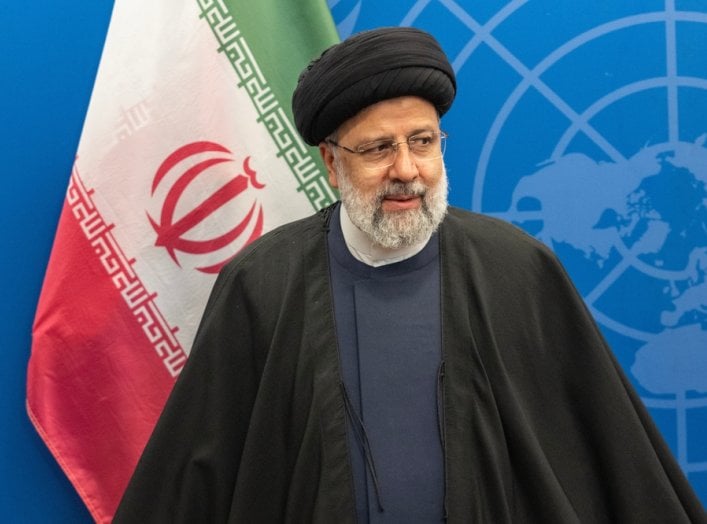
Image: Wikimedia Commons/Kevin Zollman. CC BY-SA 2.5.

Iran, United States

Intelligence and Public Perceptions of It

A common current piece of advice to U.S. intelligence agencies, coming from many places including reportedly from official advisory panels, is that those agencies ought to de-emphasize whacking terrorists and redirect some of that effort to traditional functions of collecting and analyzing intelligence, lest the United States be blind-sided by something in China or the Middle East or elsewhere. Just about everyone who comments on what U.S. intelligence agencies ought to be doing seems to be saying something along that line; we don't need to turn to any official panels with privileged access to hear that. The message has an appealing, back-to-basics ring to it, as well as having the appeal of sounding forward-looking. And the message is substantively sound; intelligence agencies ought indeed to focus on the core missions of collecting and analyzing information about the world outside the United States.

Sound though this particular message is, it is another illustration of publicly expressed conventional wisdom about intelligence that exists as a sort of parallel universe, separate from what the intelligence agencies are actually doing—of which, given the classified nature of that activity, the public commentators know little. Without access to the real thing, purveyors of conventional wisdom feed on each other's output until the conventional wisdom gets treated as if it were hard fact. When the conventional wisdom says something about how the intelligence community has been devoting too much attention to one topic and ought to shift attention to something else, this is really much more a reflection of where the public commentary itself has been devoting attention. The same is true of what counts as a “surprise”; this often has less to do with what intelligence agencies were or were not telling their official customers behind closed doors than with what the public had or had not been conditioned to expect, based on public statements and discussion.

Amid pronouncements coming from the parallel universe, several realities about the actual world of intelligence ought to be noted.

One is that disproportionate public attention to certain subjects or activities does not reflect the actual allocation within the agencies of resources and priorities. What is controversial or receives much public attention does necessarily seize the attention of senior managers who have to deal with Congress. But that is not true of the large majority of the work force, most of which has always been focused on the core missions of collecting and analyzing intelligence, or directly supporting those who do.

Another reality is that the swing of the pendulum of attention from one topic to another in the actual world of intelligence is not nearly as exaggerated as swings in the parallel universe. This gives rise to myths, such as that during the Cold War the intelligence community devoted nearly all of its attention to matters involving the Soviet Union.

Yet another reality is that the intelligence community devotes much effort on its own to keeping its priorities well-grounded and up-to-date, applying the dual criteria of what is of long-term importance to the country and what the policy-makers of the day most want to hear about. Here the mistaken myth is that it takes kicks in the pants from outsiders such as advisory panels to make priorities up to date.

It is true—and here is where the two otherwise parallel universes intersect—that some of what the intelligence agencies do in reallocating resources is in response to shifting public demands. The agencies certainly expanded work on terrorism greatly after 9/11. This was not because the nature of the terrorist threat had suddenly changed (it didn't) or because before 9/11 the intelligence community did not understand that threat (it did). It was because with the sudden and enormous change in the public mood and public concerns, intelligence managers had to show Congress and others on the outside that they were beefing up work in this area.

What does not get nearly as much public attention in such circumstances is what trade-offs are involved in any such reallocation. With resources always limited, responding to public demands on one thing may increase the chance of genuine surprise in the future on something else—something that inhabitants of the parallel universe probably are paying scant attention to today.

United States

Moralism and Realism

There is a moral deficit in the way much American discussion of foreign policy fails to take account of the perspectives and interests of foreigners that U.S. policy affects. Marc Lynch noted this failure with regard to recent retrospective commentary about the Iraq War, Robert Wright has referred more generally to a chronic lack in this country of “moral imagination,” and Robert Golan-Vilella recently summarized the observations of both in these spaces. If we apply widely accepted principles of moral philosophy to the level of international relations, then taking better account than we usually do now of those foreign perspectives and interests would be the ethical thing to do.

An important further point, however, is that it also would be the right thing to do from a hard-boiled realist perspective that is tightly focused on U.S. interests and that some people might view (however incorrectly) as amoral. Paying insufficient attention to foreign interests, perspectives and sensibilities is wrong on this count as well as being wrong on ethical grounds.

Usually it is those critical of realism—including most conspicuously, but not limited to, today's neoconservatives—who claim to be the ones who understand and practice a convergence between morality and power, and between values and interests. They tend to criticize realists for insufficiently incorporating values into an otherwise empty pursuit of power for power's sake. But these claims rest on unduly narrow interpretations both of values and of the effects on national interests. The values being asserted are more parochially American than is usually acknowledged. The neoconservative perspective, for example, rarely takes account of the value of justice as it usually is articulated throughout the Middle East. This perspective also tends to limit its consideration of effects on national interests to direct, first-order (especially kinetic) effects, while failing to take adequate account of broader, longer-range, more indirect consequences.

Paying insufficient attention to foreign interests and perspectives has multiple negative consequences for U.S. interests. These consequences are no less important for being generally less readily apparent and less measurable than are the kinetic and other direct consequences that get more attention.

This attention gap can make it more difficult for the United States to accomplish whatever it is trying to accomplish overseas, because the support and understanding of a foreign population is needed to make a project succeed. If one is trying, for example, to establish a fairly stable representative democracy, as was the case in the Iraq War, this objective will be undermined by creating disaffection among Iraqis.

Outright resentment of the United States among foreign populations damages U.S. interests in further ways, with a resort to terrorism or other extremist violence by some subset of the resentful population being the most obvious but by no means the only such consequence. Those bearing grudges may extend far beyond the foreigners directly affected by U.S. actions, to include many who are hundreds or thousands of miles away and learn of the actions through mass media and rumors.

Whenever populations acquire strongly negative sentiments, it necessarily affects what their governments do, even in authoritarian regimes. This means in the current instance less willingness by governments to cooperate with the United States in countless other endeavors.

Finally, the credibility of the United States usually gets damaged—especially its credibility whenever it says it is acting in other peoples' best interests. That loss of credibility means still less willingness to cooperate on many other matters that may be important to Washington.

Often there are difficult choices or trade-offs between different practices, but this is not one of them. Morality and realism point in the same direction. The need to pay far greater heed to the interests, perceptions, objectives and sentiments of foreigners than Americans routinely do now is overdetermined.

United States

Why a 'Game Changer'?

President Obama's visit to Israel has shaped up the way the White House probably hoped and expected it to, which is to say without surprises or major hiccups and with pre-programmed messages coming through strongly. There have been three such messages in particular. One is that despite previous frictions, relations between the president and his friend Bibi are peachy. Conveying the image of peachiness has required the president to exude in tandem with the prime minister what has been Netanyahu's number one preferred message, which is that Iran is a horrible threat. Thanks to persistent questioning by reporters at a joint press conference, however, Netanyahu did seem to accept the idea that an Iranian nuclear weapon isn't something that anyone is going to see for at least the next year.

Another White House message was about how, despite general Israeli wariness and distrust of Obama, he really has great sympathy and empathy for the Israeli people. The first half of the president's biggest speech of the visit, delivered in Jerusalem on Thursday, was a tour de force of such empathy and sympathy. The only conceivable reason any Israeli might wince is over how thickly the president's speechwriters were laying it on.

The third message began abruptly about mid-way in that same speech. It concerned the need for Israel to make peace with the Palestinians, and the president's belief that such an agreement is still feasible. That half of the speech was an eloquent explanation of why reaching such a peace agreement is very much in the interests of the Israeli people. But beyond a gentle observation about how citizens sometimes have to push their politicians into action, Obama has said or done nothing else on this trip to help make an Israeli-Palestinian peace a reality. In particular, he has not gone beyond the usual feeble references to “unhelpfulness” in addressing the continuing Israeli colonization program that is making a two-state solution to the conflict less feasible with each passing year. So we can can only hope and wait for some kind of follow-up action.

While hoping and waiting, we might take note of something else the president said in his appearance with Netanyahu, concerning the more immediate situation of Syria. Amid unconfirmed reports of use by the regime of chemical weapons, Obama remarked that any such use would be a “game changer.” This evidently was not just an off-the-cuff comment; he said something similar in the Jerusalem speech. We should ask: exactly why would use of a particular category of weapons in the ongoing Syrian civil war be considered a “game changer”?

One of the real answers is that this is another manifestation of the public fascination with any kind of unconventional weapons. The fascination (and fear) has extended indiscriminately to all parts of the CBRN quartet that also has included biological, radiological and nuclear devices. The fascination repeatedly comes up in discussions of terrorism, in a way that has consistently outpaced what terrorists actually have been doing. And of course it was a centerpiece of the selling of the expedition whose ten-year anniversary we have been observing (or lamenting) this week.

Just as it was ten years ago, chemical weapons routinely get termed a “weapon of mass destruction.” But they are not really that, in the way that nuclear or biological weapons could be. Rather exacting, and not very common, conditions regarding the physical environment and the deployment of opposing forces have to be met for chemicals to inflict what could be considered mass casualties. To be sure, chemical weapons can have very nasty effects, and it was that nastiness relative to their military utility that led to their use being legally banned through international agreement. But conventional means can be used to produce nasty and even hideous effects, too.

That's true of the Syrian civil war. If one wants to indict the Syrian regime for inflicting much physical suffering on its people, one does not have to look for a deployment of chemical weapons. One doesn't even have to look at the current civil war. When Bashar Assad's father was still in charge, for example, the regime carried out a massacre in Hama in 1982 in which the total casualties will never be known with accuracy but have produced estimates of 10,000-40,000 killed. No chemical weapons appear to have been used in that operation, but other tactics with effects just as grisly reportedly were—such as pouring fuel into underground tunnels and then igniting it to incinerate members of the resistance hiding there.

Another reason for some to seize on the possible use by the regime of chemical weapons is to use it as a hook for arguing anew for the United States to get involved more heavily in the Syrian civil war. So once again—as was the case ten years ago—a factual question with a presumed yes-or-no answer about a regime's use or possession of a certain category of weapons gets treated as if the answer dictates a certain policy course, even though it doesn't.

Speaking of that bad experience a decade ago, here's one more way to think about the significance of chemical weapons. Suppose, as a counterfactual, that U.S. troops invading Iraq had come upon large stockpiles of chemical weapons. How would history have been different? The Bush administration, of course, would have been able to say: Yes, Iraqi WMD do exist! And much of the later commentary and criticism about the war would have had to take a different form from what it did. If the Iraqis had used any of those weapons it would have complicated the invasion phase of the operation. But otherwise history would have been the same. There still would have been no alliance between Iraq and al-Qaeda. The invasion still would not have saved Americans from some grave threat. The thousands of casualties and trillions of dollars still would have been needlessly spent. The heavy diplomatic and political damage to the United States still would have been incurred. The war still would have been a big blunder. And the chemical weapons would not have changed any games.

The Presidency, WMD

The Strange Friendship

Commentary yet to be written on President Obama's visit to Israel no doubt will be infused with readings of the congeniality meter—assessments of whether meetings between the president and the Israeli prime minister show any evidence of warming of U.S.-Israeli relations. Consensus expectations seem to be pretty low on this score, but that will not stop the meter-reading. There's nothing wrong with that on the face of it. What is wrong, however, is the prevalent assumption that warmth in this case is necessarily good, and lack of warmth necessarily bad. Warmth is good if it advances or protects U.S. interests, not if it doesn't.

In many alliances and friendships between nations this may seem almost like a distinction without a difference. There may be a reservoir of empathy, goodwill and, most important, a broad set of common or parallel interests that pays dividends to each side in ways that do not need to be connected explicitly with any one action or any one summit meeting at which leaders make nice to each other. Keeping the reservoir filled can confidently be expected to be good for the interests of one's own nation over the long term. This generally characterizes, for example, the relationship that the United States has with Britain or Canada. But the relationship between the United States and Israel is extraordinary and very different from any other—so much so in its nature and implications that it deserves to be called strange. The profuse provision of support and expressions that the larger country directs to the smaller one is not rooted in commonality of interests but instead in the larger country's internal politics.

Given the strangeness of the relationship, odd things are done about it and said about it every week, especially by American politicians. Consider an example from the chairman of the Senate Foreign Relations Committee, Robert Menendez (D-NJ), which also refers to something else this week—the ten-year anniversary of the start of the Iraq War—and extends as well to the issue of dealing with Iran, which as it is treated politically in the United States is at least as much an Israel issue as an Iran issue. Menendez begins by noting that he opposed the Iraq War, which he correctly terms a war of choice. Good for him. Then he harks back to the earlier Gulf war in 1991 and recalls that Israel's restraint in not striking back for Iraqi Scud missile attacks, because “it knew America had its back,” was an important factor in the failure of “Saddam's desperate attempt to divide the international coalition.” He's right about that, too.

But then look at the implication he draws for current policy toward Iran. He says that “our security is enhanced when the United States stands with Israel,” that “when it comes to Iran's nuclear program, it's clear there cannot be any daylight between the United States and Israel,” and “that is why” Menendez and Senator Lindsey Graham introduced a resolution that would give a green light to Israel for launching a war against Iran and pledges to back Israel to the hilt if it does so. Let's get this straight. From the fact that it was in U.S. interests for Israel to stay out of one Persian Gulf war 22 years ago, we are supposed to welcome Israel not only getting involved in another conflict but also starting it and dragging the United States into a war it would not otherwise be fighting? It is with good reason that some have called the Menendez-Graham measure the “backdoor to war” resolution. As I said, the strange relationship with Israel leads American politicians to do and say odd things.

The Israelis themselves come up with plenty of oddities. For example, they seem to have a flair for picking high-level U.S. visits as a good time to drive some more stakes into what is left of hope for a two-state solution to the Israeli-Palestinian conflict. Last weekend the new Israeli housing minister said that he wants “many, many more” Israeli settlers in the West Bank and that “there can be only one state between the Jordan River and the Mediterranean Sea—Israel.”

The Israelis are also said to be intent on pressing for release of the spy Jonathan Pollard. Never mind that Pollard, the perpetrator of one of the largest cases of wholesale selling of secrets in American history, reportedly spied not only for Israel but offered his services to other countries (including the maker of the first Islamic bomb, Pakistan) and was motivated largely by money. Note the oxymoronic comments one hears that Pollard has been punished enough for someone who “spied for an ally.” Espionage is a hostile act; it is not the act of an ally.

Let's go ahead and gauge the temperature of the president's meetings in Israel and draw whatever conclusions we want. But let's not confuse any apparent warmth we can detect with genuine friendship, commonality of interests, or an advance of U.S. interests.

The Gun Lobby Tackles Foreign Policy

Those of us who worry and write more about about foreign affairs than about domestic ones have largely been spared confrontation with the formidable U.S. gun lobby. There is only the sadness any citizen can feel at this country's political inability to regulate effectively the trade in implements used in the sorts of violent incidents that have led gun control to move back, at least for now, to a prominent place on the national agenda. The resumption this week, however, of multilateral negotiations on a treaty on the international trade in conventional arms demonstrates that foreign policy is not immune to the gun lobby's heavyweight presence. The lobby, as represented most familiarly by the National Rifle Association, is by no means the only source of disquiet about such a treaty in the United States—which is, by a small margin over Russia, the world's leading arms exporter. But the lobby is mounting a significant effort to spike the treaty even before negotiations are complete.

The idea of implementing additional international legal control on the arms trade has been around for some time. Diplomatic activity leading directly to the current negotiations began about a decade ago. Back in the 1970s, ultimately unsuccessful bilateral negotiations to curb the trade in conventional arms took place between the two largest arms sellers, the United States and the Soviet Union. The type of multilateral treaty that is currently under discussion at the United Nations would hardly be a cure-all for the kinds of internal violence that are the main concern. It would, however, be a modest and reasonable measure to provide a legal framework aimed at reducing the means for perpetrating the most egregious instances of such violence, and otherwise creating greater transparency in the international arms trade.

The NRA has introduced some strange arguments against the not-yet-completed treaty, forming an interesting contrast to arguments it is making against domestic gun control legislation. The organization argues that military and civilian firearms are two different and easily distinguishable things, and that although military arms are a legitimate subject for such a treaty the problem is that civilian guns also would be caught up in it. That position hardly seems consistent, at least in spirit, with the NRA's vigorous opposition to Senator Feinstein's bill to curb the trade in military-style assault rifles.

The NRA also notes with alarm that under some of the draft versions of the treaty that have been circulated, “law-abiding Americans” might not be able to buy foreign-made guns because exports could be blocked if they would "support" or "encourage" terrorist acts or "provoke, prolong or aggravate acts of aggression or other breaches of the peace," or could be used in "gender-based violence" or to inflict "human suffering." Of course, in opposing domestic legislation the NRA contends that the gun trade doesn't do any of those things. Granted, this is not an outright contradiction, because the organization is saying that it is only the claims of “anti-gun activists” that could lead foreign governments to “abuse” this provision in a treaty. But if this is not a contradiction, it certainly is a contortion.

The gun lobbyists at the NRA also seem to be saying, without being explicit about it, that their own future lobbying will screw up the way the treaty would work. They say this about how end-user registration requirements in the treaty would work. Under such requirements, according to the NRA,

if you bought a Beretta shotgun, you would be an "end user" and the U.S. government would have to keep a record of you and notify the Italian government about your purchase. That is gun registration. If the U.S. refuses to implement this data collection on law-abiding American gun owners, other nations might be required to ban the export of firearms to the U.S.

In other words, the gun lobby opposes the treaty because if the gun lobby is successful enough in the future to get the U. S. government not to fulfill obligations under the treaty, other countries might react in ways the gun lobby doesn't like.

It is hard to believe the NRA lobbyists take this sort of stuff seriously. More likely what we are seeing is simply unrelenting opposition to anything that is at all related to controlling munitions and thus could be part of a slippery slope that might increase even marginally the chance of effective domestic gun control in the future. Meanwhile, this lobbying is impeding effective U.S. participation in the creation of a treaty that, it should be remembered, is not just about shotguns and rifles but also tanks, jet aircraft, and all other kinds of conventional armament.

As in the debates about domestic gun control, there is the added confusion of trying to make this a constitutional issue. The Second Amendment is patently about militias, and as any American high school student ought to know, the Bill of Rights of which it is a part was born amid a vigorous debate over ratification of the original Constitution. The overriding concern of those who resisted ratification was about the power of the new federal government. The particular concern about militias and about state power was intensified by the provision in the original Article II that gave the president the power to take command of the state militias.

The individual right that got discussed in connection with this was not so much a right to have a gun but rather the right on religious grounds to avoid military service, including in a militia. James Madison's original version of what would become the Second Amendment said that "the right of the people to keep and bear arms shall not be infringed, a well-armed and well-regulated militia being the best security of a free country, but no conscientious objector shall be compelled to render military service in person." The provision about conscientious objectors received the most attention in debate in the House of Representatives, which ultimately left it in. The Senate took it out, while almost putting in the clarifying language “for the common defense”. After some more rearrangement of words we got the Second Amendment we have today—an amendment written not just by one but by several committees.

It's too bad there wasn't some master editor back then who could, with a single pen, express most clearly the consensus intent, producing language such as:

The right of the states to maintain well-armed, well-regulated militias shall not be infringed.

That might have avoided or at least reduced a number of problems, including the NRA messing around with foreign policy.

United States

Still Peddling Iraq War Myths, Ten Years Later

Documentaries, commentaries and forums marking the ten-year anniversary of the beginning of the Iraq War have been so numerous that they already have become tiresome, even though the actual anniversary of the invasion is not until next Tuesday. The repetition would nonetheless be worthwhile if it helped to inculcate and to reinforce lessons that might reduce the chance that a debacle comparable to the Iraq War will itself be repeated. Maybe some such positive reinforcement will occur, but a problem is that the anniversary retrospectives also give renewed exposure to those who promoted the war and have a large stake in still promoting the idea that they were not responsible for foisting on the nation an expedition that was so hugely damaging to American interests.

I participated in one anniversary event earlier this week: a loosely structured on-the-record discussion, organized by the Rand Corporation and the publishers of Foreign Policy, involving about twenty people who had something to do with the Iraq War, whether it was starting it, fighting it, or writing about it. The session had the admirable stated purpose of extracting lessons for the future rather than merely repeating old debates from the past. But a clear pattern throughout the event was that ten years have not diluted the house line of those most directly involved in promoting the war, including among others then-deputy national security adviser Stephen Hadley and Douglas Feith, who as an undersecretary of defense was one of the most rabid of the war promoters. Not only did they give no hint of acknowledgment that this war of choice (and Hadley refused to accept even that characterization) was one of the worst and most inexcusable blunders in the history of U.S. foreign policy. They also stuck to the line that if there was any mistake in the origin of the war it was solely a matter of “bad intelligence” and that the only “lessons” to be learned were to distrust intelligence more or ask tougher questions about it.

Intelligence did not drive or guide the decision to invade Iraq—not by a long shot, despite the aggressive use by the Bush administration of cherry-picked fragments of intelligence reporting in its public sales campaign for the war. Multiple realities confirm this observation. I have addressed them in detail elsewhere, but it would be useful to mention briefly the main ones.

The neoconservative champions of the war were publicly pushing for the use of military force to overthrow Saddam Hussein even in the 1990s, when they were out of power. One they were in power in the Bush administration, the intelligence community was not saying to them anything about Iraqi weapons programs that was remotely close to an expression of alarm about such programs, much less a reason to go to war. In its public assessments and (as investigative journalists such as Bob Woodward have reported) in closed ones as well, George Tenet and the community barely even mentioned the subject as being worthy of the policy-makers' attention. Consistent with such assessments, Secretary of State Colin Powell was saying publicly in the first year of the Bush administration that Saddam Hussein was well contained and that whatever he might be trying to do with unconventional weapons, he wasn't having much success. It was only after the 9/11 terrorist attack drastically changed the mood of the American public and thereby created for the first time the domestic political base for the neocons to realize their regime-changing dream that the administration turned Iraqi weapons programs into a war-justifying rationale.

In rare unguarded comments, some promoters of the war let slip that this is how they were using the issue. Feith and Paul Wolfowitz each later admitted that the weapons of mass destruction issue was a convenient public selling point, not the reason the war was being launched in the first place.

Policy-makers in the administration showed no interest at all in the intelligence community's judgments about Iraq, regarding weapons programs or anything else, despite the assiduousness with which they exploited the fragments of reporting that could be woven into their public sales campaign. The administration did not ask for the infamously flawed intelligence estimate about Iraqi unconventional weapons programs—Democrats in Congress did.

Even that estimate did not support the war-making case. Among other things it contained the judgment that if Saddam did have any of those feared weapons of mass destruction he was unlikely to use them against U.S. interests or to give them to terrorists—except in the extreme case in which his country was invaded and his regime about to be overthrown. If this judgment had a policy implication it was not to launch the war. The judgment directly contradicted—but did nothing to slow down—the administration's steady stream of scary rhetoric about how in the absence of a war Saddam could give weapons of mass destruction to terrorist groups.

Even if everything in the intelligence assessments about Iraqi weapons were true, this would not have constituted a case for launching an offensive war any more than it would have with China, North Korea, Pakistan, the Soviet Union or any other country which has developed nuclear weapons. This is indicated by the fact that even many people, both in the United States and abroad, who accepted the belief about Iraqi weapons of mass destruction nonetheless opposed the war.

Intelligence assessments on other aspects of Iraq constituted even less of a case for the war. In fact, some of the most important intelligence judgments were so contrary to the administration's pro-war case that the war promoters, far from being guided by those judgments, put considerable effort into trying to discredit them. (That's what the effort in the vice president's office that led to the criminal case against Lewis Libby was all about.) This was especially true of the intelligence community's judgments about terrorist connections, which contradicted the administration's phantasmagorical assertions about an “alliance” between Saddam's regime and al-Qaeda. It was also true of the community's judgments—which turned out to be much more relevant to the painful experience that the Iraq War became than were any judgments about weapons of mass destruction—about the political, security and economic mess in Iraq that was likely to follow overthrow of the regime.

The story of the United States getting into the Iraq War was, of course, not just one of what led the war's promoters to seek a war but also of how they were able to get enough other Americans to go along for the ride. But despite how much many of those other Americans, including ones in Congress who voted in favor of the war, said they hinged their position on judgments about Iraqi weapons, intelligence did not drive or guide that part of the process either. Only a very few members of Congress bothered even to look at the infamous intelligence estimate on the subject. One of the few who did—Bob Graham, then chairman of the Senate intelligence committee—later said his reading showed to him that the intelligence judgments were not at all the same as what the administration was saying in its sales campaign. That inconsistency was one of the reasons he voted against the war resolution.

One can also do a thought experiment by imagining how events might or might not have been different if the intelligence work on this subject had been absolutely perfect. (That is well beyond the reach of even the most magnificent intelligence service, but it can serve as an imaginary reference point.) “Perfect” in this case could be equated with what was in the exhaustive post-invasion report later compiled based on exploiting all the on-the-ground evidence that had been unavailable to analysts before the war. That product, known as the Duelfer report after the officer who was in charge of most of its preparation, concluded that Saddam intended to reactivate his nuclear and other unconventional weapons programs once he got out from under the already-weakening international sanctions. If prewar intelligence assessments had said the same things as the Duelfer report, the administration would have had to change a few lines in its rhetoric and maybe would have lost a few member's votes in Congress, but otherwise the sales campaign—which was much more about Saddam's intentions and what he “could” do than about extant weapons systems—would have been unchanged. The administration still would have gotten its war. Even Dick Cheney later cited the actual Duelfer report as support for the administration's pro-war case.

And yet, despite the voluminous record that bad intelligence was not why the United States went to war in Iraq, the myth that it was persists partly because the war promoters also keep promoting the myth. The event in which I participated this week demonstrates this hazard of the ten-year anniversary happenings. An early write-up of the event correctly notes that there were “sharp exchanges” on this and other questions, but on this question only quotes the side of the exchange that came from Hadley and Feith.

If one wants to learn valid lessons from what happened ten years ago, the process back then was so pathological that many specific lessons about what to avoid in the future could be extracted. Many of those lessons could be subsumed into one observation: extraordinary as it may seem, there was no policy process at all—no options paper, no meeting in the White House situation room or anything else—that addressed whether going to war against Iraq was a good idea. So it was not only the intelligence community but also other sources of information and insight, inside and outside government, that were shut out from having any impact on the decision to launch the war.

Hadley denied this observation, too, muttering something about needing to keep things close-hold so as not to jeopardize the “diplomatic process.” That just raises another myth—that the administration was trying to solve a problem through diplomacy before resorting to force—that also is belied by a substantial record, leading up to the final days in which the United States kicked international arms inspectors out of Iraq and in effect said “never mind that we didn't get another UN resolution, we're going to war anyway.” What pretended to be interest in diplomacy was a charade intended mainly to placate Powell and the British.

Iraq

Follow The National Interest

May 23, 2013