
Accosted on Kingsway
A scene straight out of 1920s Berlin in modern London.
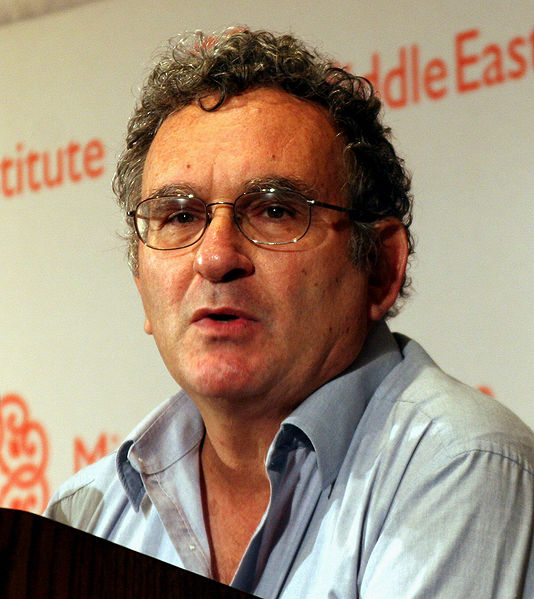 Last week I had a rather ambivalent experience at the London School of Economics which may point to something beyond the personal—indeed, about where Britain, and possibly Western Europe as a whole, are heading.
I was invited to lecture on the first Arab-Israeli war of 1948. A few hours earlier, a fire had broken out in a nearby building and Kingsway was sealed off, so the taxi dropped me off a few blocks away. As I walked down Kingsway, a major London thoroughfare, a small mob—I don't think any other word is appropriate—of some dozen Muslims, Arabs and their supporters, both men and women, surrounded me and, walking alongside me for several hundred yards as I advanced towards the building where the lecture was to take place, raucously harangued and bated me with cries of "fascist," "racist," "England should never have allowed you in," "you shouldn't be allowed to speak." Several spoke in broken, obviously newly acquired, English. Violence was thick in the air though none was actually used. Passersby looked on in astonishment, and perhaps shame, but it seemed the sight of angry bearded, caftaned Muslims was sufficient to deter any intervention. To me, it felt like Brownshirts in a street scene in 1920s Berlin—though on Kingsway no one, to the best of my recall, screamed the word "Jew."
In the lecture hall, after a cup of tea, the session, with an audience of some 350 students and others, passed remarkably smoothly. Entry required tickets, which were freely dispensed upon the provision of name and address. The LSE had beefed up security and several bobbies stood outside the building confronting the dozen or so demonstrators who held aloft placards stating "Benni Morris is a Fascist," "Go home," etc. Inside, in the lecture hall, surprisingly, there was absolute silence during my talk; you could have heard a pin drop. The Q and A session afterwards was by and large civilized, though several Muslim participants, including girls with scarves, displayed anger and dismissiveness. One asserted: "You are not an historian"; another, more delicately, suggested that the lecturer "professes to be a serious historian." However, the overwhleming majority of the audience was respectful and, in my view, appreciative (to judge by the volume of clapping at the end of the lecture and at the end of the Q and A), but a small minority jeered and clapped loudly when anti-Zionist questions or points were raised.
The manner of our exit from the lecture hall was also noteworthy. The chairman asked the audience to stay in their seats until the group on stage departed. I was ushered by the security team down an elevator and through a narrow basement passage full of kitchen stores and out a side entrance. Like an American president in a B-rated thriller.
Another disconcerting element in what went on in the lecture hall was the hosting LSE professor's brief introductory remarks, which failed completely to note the harrassment and intimidation (of which he had been made fully aware) of the lecturer on Kingsway, or to criticize them in any way. My assumption was that some were LSE students.
There was a sense that the chairman was deliberately displaying caution in view of the world in which he lives. Which brings me back to what happened on Kingsway.
Uncurbed, Muslim intimidation in the public domain of people they see as disagreeing with them is palpable and palpably affecting the British Christian majority among whom they live, indeed, cowing them into silence. One senses real fear (perhaps a corner was turned with the Muslim reactions around the world to the "Mohammed cartoons" and the responses in the West to these reactions.) Which, if true, is a sad indication of what is happening in the historic mother of democracies and may point to what is happening, and will increasingly happen, in Western Europe in general in the coming decades. (A video of the LSE talk is on the website. A Muslim cameraman also made a video of the mob scene on Kingsway and posted it on the web—but appears to have thought better of it and subsequently removed it.)
Image by Aude