
Intervention in Libya and Syria Isn’t Humanitarian or Liberal
Assad's fall, like Qaddafi's, is likely to produce extended illiberal chaos or a new set of autocrats.
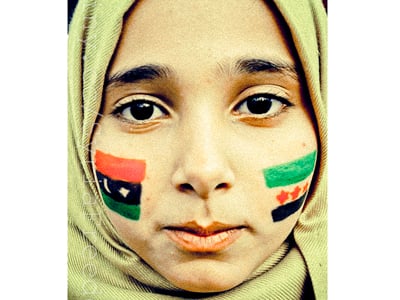 Proponents of foreign military intervention in Libya argued that giving air support to rebels there would spread liberalism and save Libyan lives. But the success of that revolution has thus far delivered political chaos destructive to both ends. That result is worth noting as backers of the Libya intervention offer it as a model for aiding Syrian rebels in the name of similar goals.
Advocates of both interventions underestimate coercion’s contribution to political order. Autocratic rule in these countries is partially a consequence of state weakness—the absence of strong liberal norms, government institutions and nationalism. By helping remove the levers of coercion in places like Libya and Syria, we risk producing anarchy—continual civil war or long-lived violent disorder. Either outcome would likely worsen suffering through widespread murder, a collapse of sanitation and health services, and the stunting of economic growth conducive to well-being. And the most promising paths to new of forms of unity and order in these states are illiberal: religious rule, war or new autocrats. The humanitarian and liberal cases for these interventions are unconvincing.
Aside from Qaddafi’s fall, U.S. leaders gave three primary rationales for military intervention Libya (I repeatedly criticized them last spring). One was to show other dictators that the international community would not tolerate the violent suppression of dissenters. That reverse domino theory has obviously failed. If Qaddafi’s fate taught neighboring leaders like Bashar al-Assad anything, it is to brutally nip opposition movements in the bud before they coalesce, attract foreign arms and air support, and kill you—or, if you’re lucky, ship you off to the Hague.
The second rationale was the establishment of liberal democracy. But Libya, like Syria, lacks the traditional building blocks of liberal democracy. And history suggests that foreign military intervention impedes democratization. Whether or not it manages to hold elections, Libya seems unlikely to become a truly liberal state any time soon. As with Syria, any path to that outcome is likely to be long and bloody.
Meanwhile, Libya’s revolution has destabilized Mali. Qaddafi’s fall pushed hundreds of Tuareg tribesmen that fought on his side back to their native Mali, where they promptly reignited an old insurgency. Malian military officers, citing their government’s insufficient vigor against the rebels, mounted a coup, overthrowing democracy that had lasted over twenty years. Thus far, the military intervention in Libya has reduced the number of democracies by one.
The most widely cited rationale for helping Libya’s rebels was to save civilians from the regime. Along with many commentators, President Obama and his aides insisted that Qaddafi promised to slaughter civilians in towns that his forces were poised to retake last March. Thus, intervention saved hundreds of thousands of lives. A minor problem with this claim is that Qaddafi’s speeches actually threatened rebel fighters, not civilians, and he explicitly exempted those rebels that put down arms. More importantly, if Qaddafi intended to massacre civilians, his forces had ample opportunity to do it. They did commit war crimes, using force indiscriminately and executing and torturing prisoners. But the sort of wholesale slaughter that the Obama administration warned of did not occur—maybe because the regime’s forces lacked the organization needed for systematic slaughter.
The limited nature of the regime’s brutality does not itself invalidate humanitarian concerns. It might be worthwhile to stop even a historically mild suppression of rebellion if the cost of doing so is low enough. The trouble with the humanitarian argument for intervention in Libya is instead that the intervention and the chaos it produced may ultimately cause more suffering than the atrocities it prevented. Libya’s rebel leaders have thus far failed to resurrect central authority. Hundreds of militias police cities and occasionally battle. There are many credible reports that militias have unlawfully detained thousands of regime supporters, executed others, driven mistrusted communities from their homes and engaged in widespread torture.
The looting of Libya’s weapons stockpiles is also likely to contribute to Libya’s misery, in part by arming the militias that obstruct central authority. The weapons depots reportedly included thousands of man-portable air-defense systems (MANPADS), some of which may still work. It is worth noting that the
No one can say with certainty whether Libya’s anarchy will produce more suffering than a Qaddafi victory would have. But that argument is plausible. Autocracies tend to serve human well-being better than chaos. That does not make it inherently immoral to help overthrow despots. It simply suggests that such interventions, whether or not they are moral or wise, do not deserve the adjective “humanitarian.”
The same goes for Syria. One need not support its brutal rulers to agree that their fall, like Qaddafi’s, is likely to produce extended illiberal chaos or another set of autocrats. I don’t know what the right U.S. policy is toward the crisis in Syria. But I doubt any policy exists that can avoid sacrificing one of our hopes for another.
Image: Freedom House